
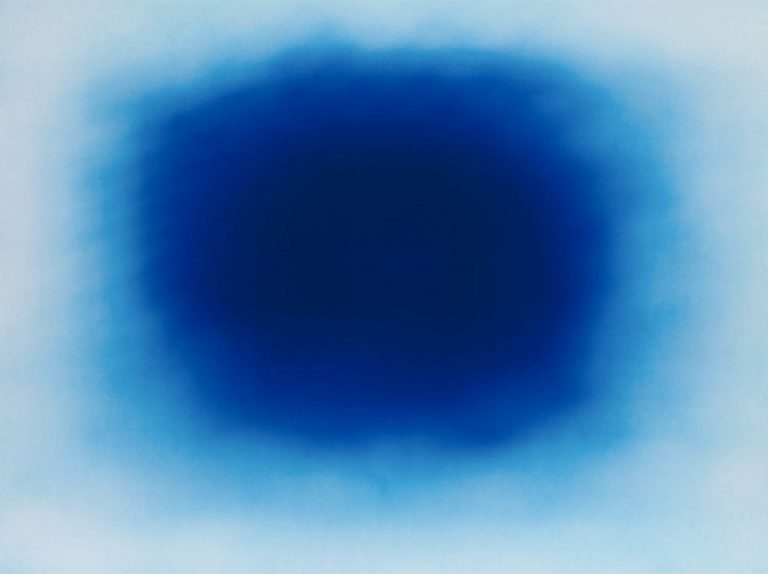
Hospital Rooms is a British charity that is turning NHS Mental Health Units into fine art spaces. We speak to the project curators about these artworks that make difficult spaces more comfortable, and are privileges for people who deserve to feel appreciated.
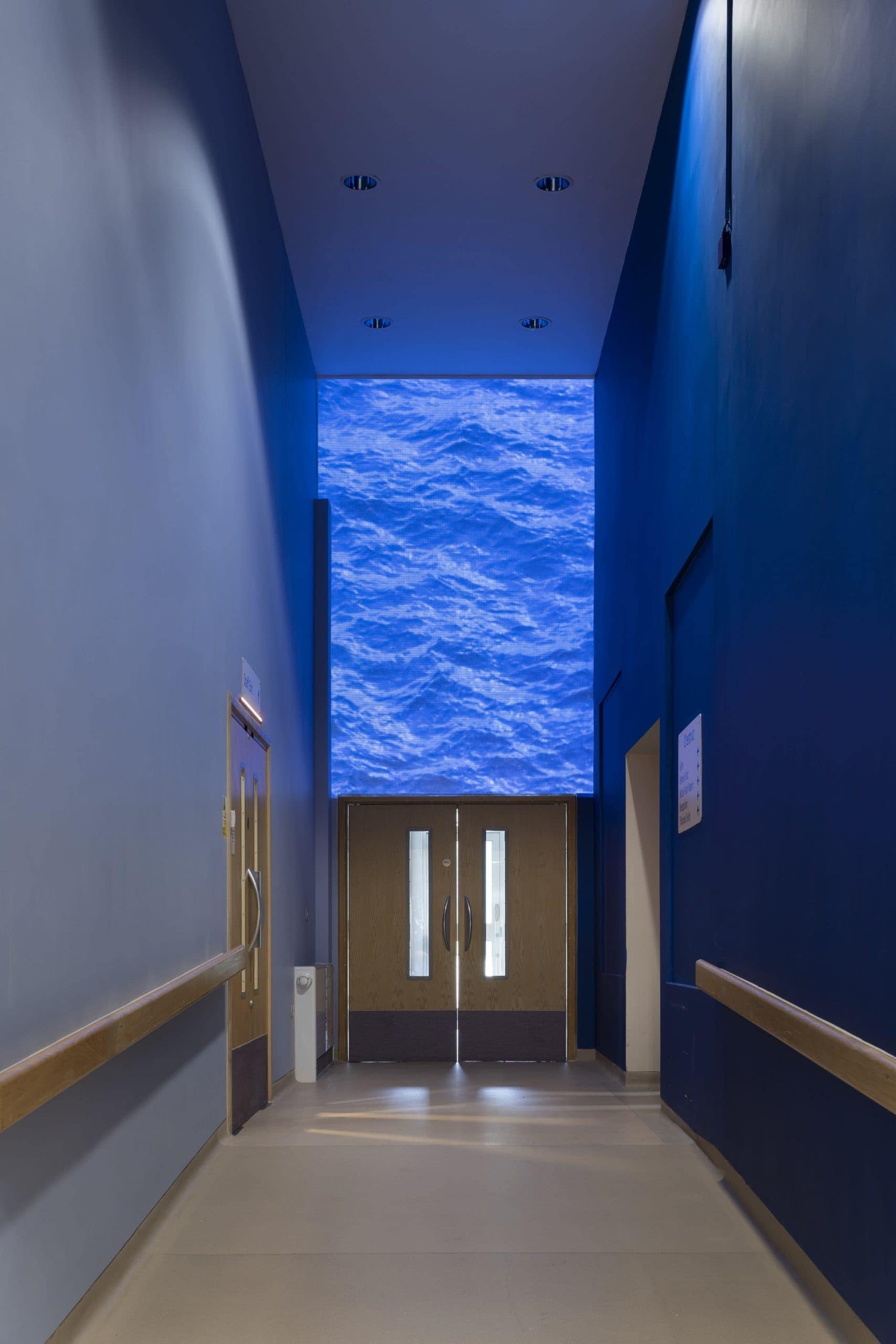
Sophie Clements, Hellingly Centre. Photo by Damian Griffiths
“We want these spaces to be as revered as our cultural ones,” says Natalie Tilbury, a project curator at Hospital Rooms. By ‘these spaces,’ she means NHS psychiatric wards – not your typical point of comparison for Britain’s most distinguished galleries and museums.
But it is a comparison worth making. Over the last five years, the work of Hospital Rooms has made it a comparison with basis. By commissioning celebrated British artists – including the likes of Antony Gormley, Anish Kapoor, Sonia Boyce and Julian Opie – to work alongside patients and carers, the charity transforms NHS Mental Health Units from the dark, dreary confines of years gone by, into spaces conducive to treatment. Quality is paramount and the work is permanent. Their mission is about more than just putting fine art on the walls. They turn the walls into fine art.
Hospital Rooms was founded by artist Tim A. Shaw and curator Niamh White. It was launched after the pair visited a friend who had recently been sectioned, and found themselves shocked by the “cold and clinical” environment, at the time patients were at their most vulnerable.
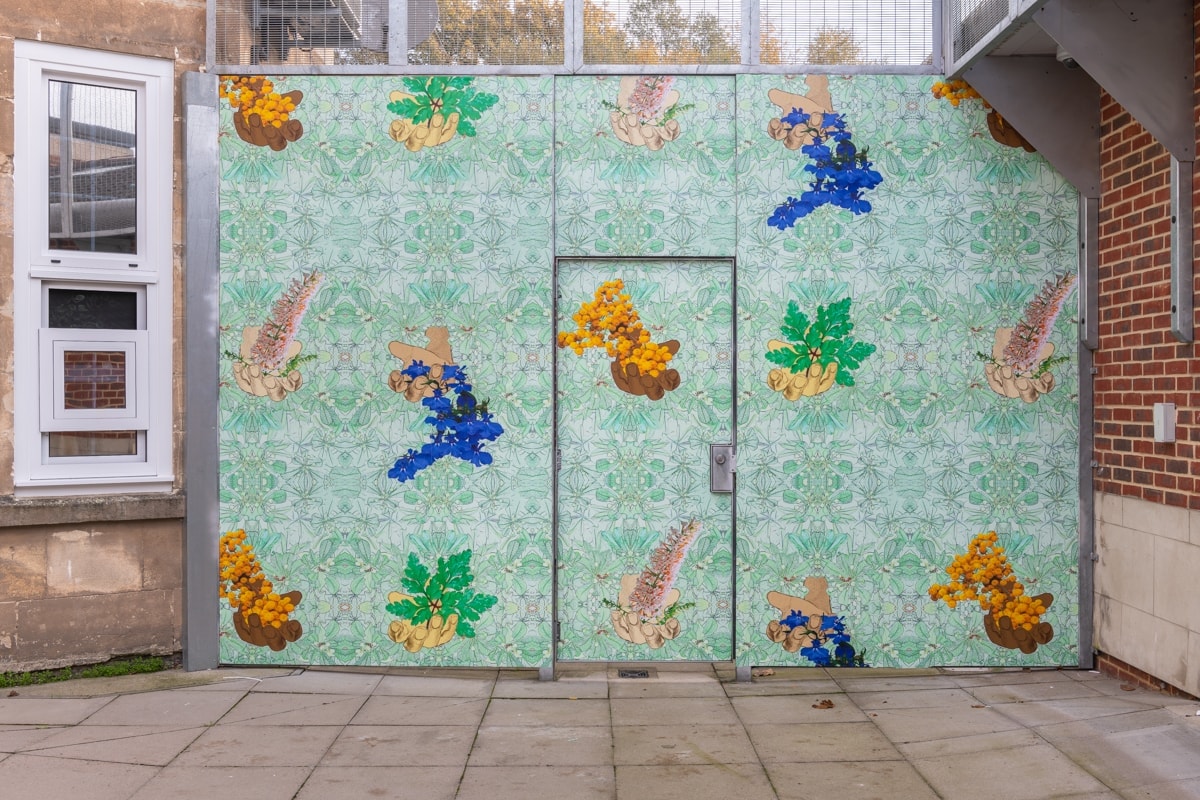
Sonia Boyce, Croydon PICU Courtyard Gate. Photo by Damian Griffiths
It took 18 months to get the first Hospital Rooms project off the ground – Shaw and White struggling to convince anyone to embark on such an ambitious undertaking – however, in 2016, the new Phoenix Unit, at Springfield University Hospital in Tooting, was unveiled.
Since then, the charity has been inundated with requests. Presently, Hospital Rooms take on six projects a year. They aim to aid all who fall under the broad umbrella of NHS clinical mental health, one unit at a time. Their work has transformed spaces ranging from Forensic Mental Health units (for those involved in the criminal justice system), to post-Partum psychosis wards, to Psychiatric Intensive Care Units (or PICUs). The needs in each setting vary, with differences in illness, severity and the expected length of stay: in some units, patients are sectioned for six weeks; in others, they may be sectioned for north of twenty years.
Tailoring each project to these specific needs is at the heart of what makes Hospital Rooms special. “All the projects are about co-production and collaboration,” Tilbury explains. “Empowering the patients, but also the staff, to take care of their environment and take ownership of the artwork created.”
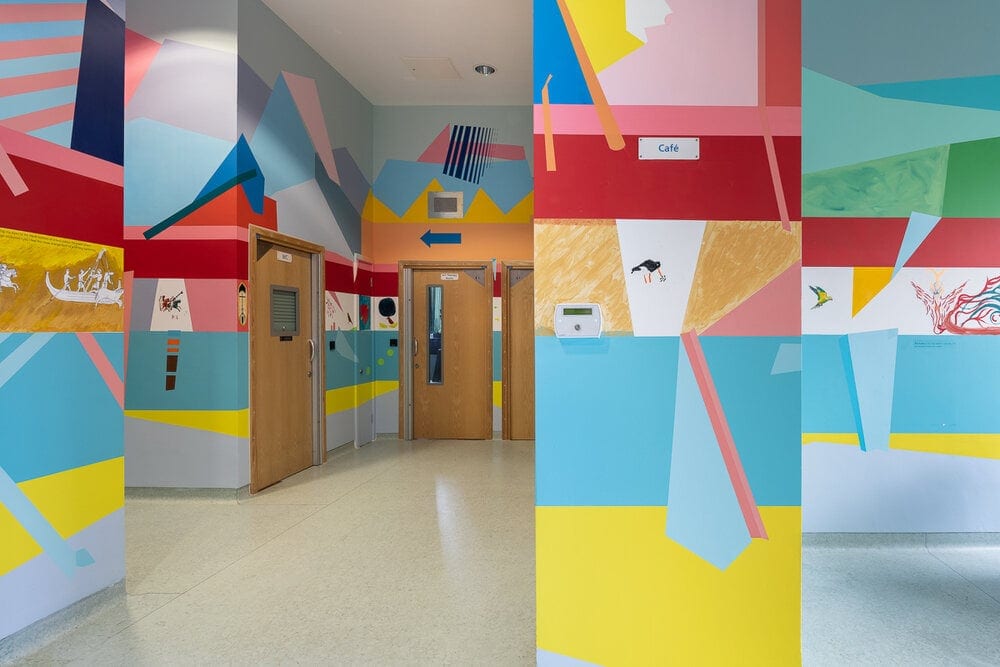
Tim A Shaw, Hellingly Centre. Photo by Damian Griffiths
This is evident in the process behind every project, each of which lasts approximately six months. Work begins with a gathering – usually at a community centre or a pub – where the artists come and meet the staff and carers and learn more about the specific mental health ward in question.
Then comes an artist-led workshop in the units themselves. Workshops facilitate conversation and encourage people to come together over creative pursuits – activities vary from painting live meerkats and owls to doing karaoke with Sonia Boyce. These workshops are crucial in allowing the patients to meet the artists who are going to transform their living area, but equally important is the artists meeting the people they are ultimately working for. It is, therefore, only after these workshops are finished, that the unit’s transformation is decided, taking on board the conversations and suggestions from patients and staff.
But then, in March 2020…well you know what’s coming next. For Hospital Rooms, the pandemic meant they couldn’t hold workshops or go into any units for nearly a year. As a result, a new dimension of the charity developed: the Hospital Rooms Digital Art School.
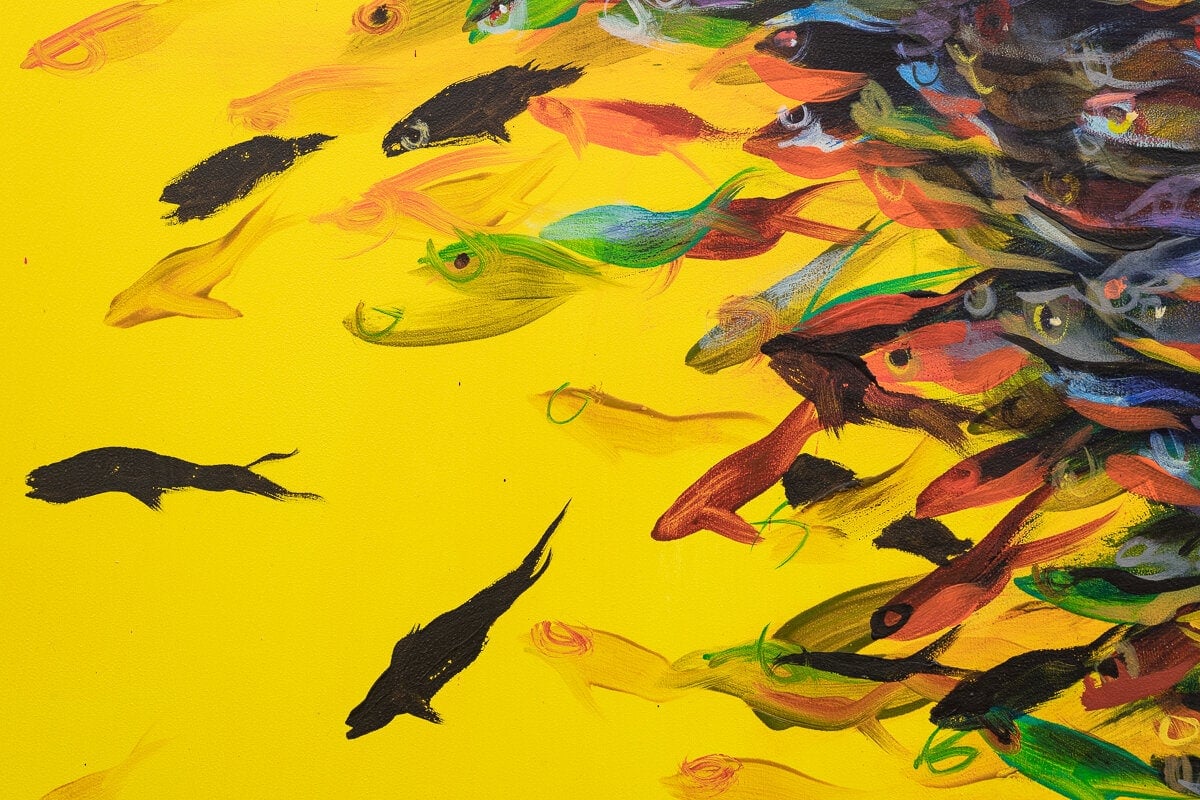
Nicola Bealing, Greenfields Livewell SW Stairwell. Photo by Damian Griffiths
Initially launched as a seven-week pilot programme at the beginning of COVID, the service has expanded and now runs weekly. Offered over Zoom and following the same model as the in-person, artist-led workshops, the calls are free and open to everyone, both those in mental health units and at home. They have been a huge success, allowing Hospital Rooms to reach more people than they ever could have beforehand.
The Digital Art School will continue post-COVID and will run concurrently with Hospital Rooms’ traditional projects. Projects that the charity has desperately missed over the last fifteen months, and is now determined to get back to. Because, though the pandemic has thrust public health – both mental and physical – into a spotlight, acute mental health difficulties are still often overlooked.
“There is not a lot of conversation about units and what they look like,” Tilbury points out. “I think there is a gulf between what we talk about when we talk about mental health, and the people who are living with severe mental health diagnoses in a unit and what that experience is like.”
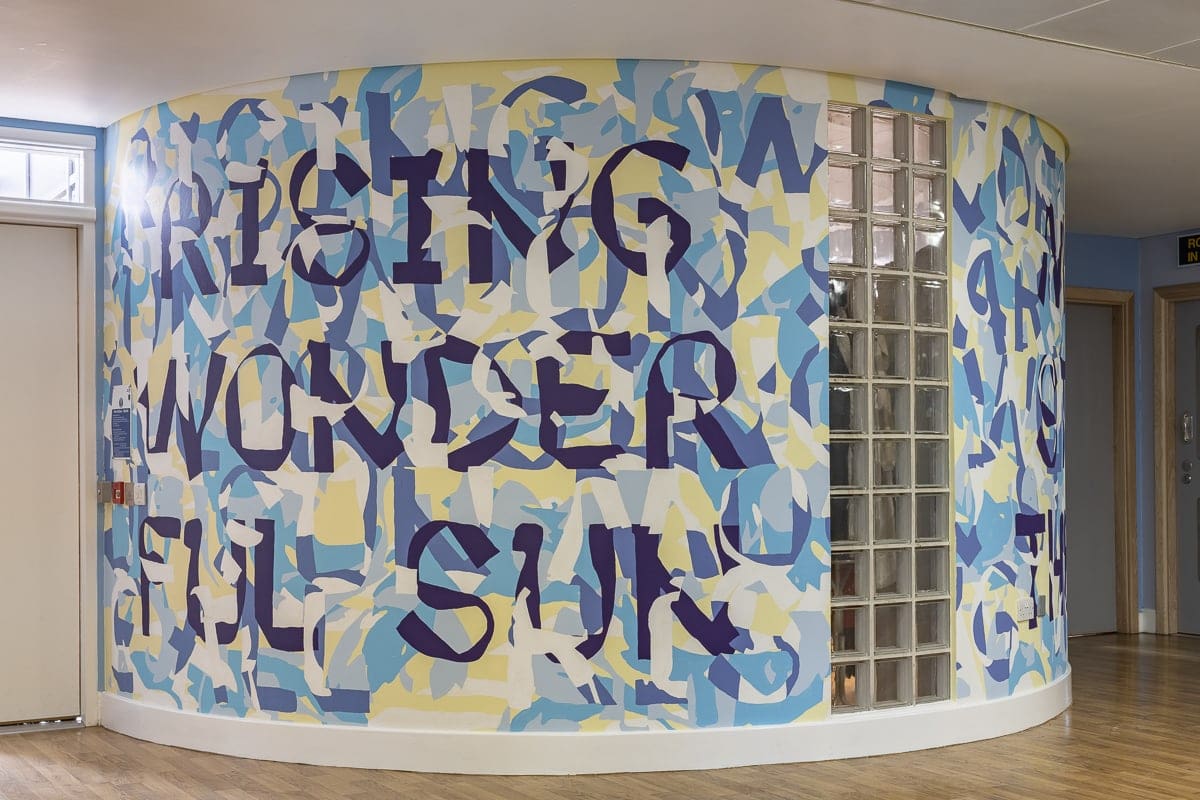
Mark Titchner, Main Dining Area, Askew Ward, W London NHS. Photo by Damian Griffiths
Hospital Rooms are interested in better understanding how they can change this experience. Through a current project, launched in partnership with Norwich University of Arts, Hospital Rooms are transforming Northside House while also collecting research to better quantify the impact of their work in mental health units.
This unique kind of project is symptomatic of the intense curiosity behind everything the charity does. Constantly ready to push the boat out and transform units through a multitude of artistic mediums, their work goes far beyond hanging a pretty picture on the wall. On top of ambitious friezes and sculptures, they have expanded into film, sculpture, and sound. They are hoping to incorporate performing arts into their future work, be it through dance or through opera.
Along with Northside House, Hospital Rooms’ other ongoing work is described as its “most pioneering to date.” 15 artists are commissioned across three projects at PICUs for men in London. There will be a total of 18 museum-quality works, by artists such as Mark Titchener, Chila Kumari Singh Burman and Susie Hamilton.
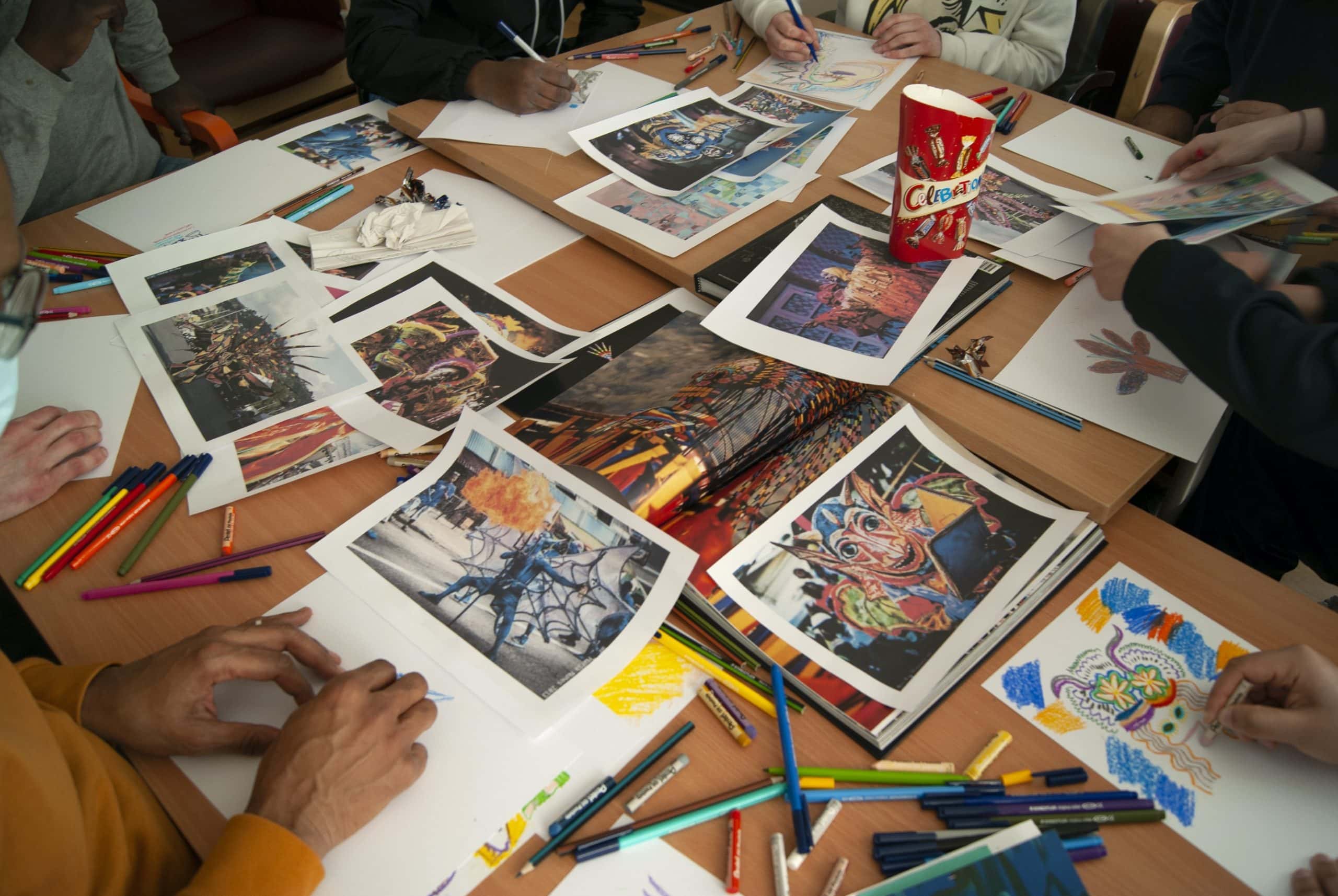
Richard Mark Rawlins, workshop at Titian PICU
The potential legacy for this kind of project is becoming clearer, five years on from the work at the Phoenix Unit. Founders Shaw and White recently returned to Springfield University Hospital for a workshop, and were given a guided tour of the Phoenix Unit by its proud residents. The artwork was still immaculate, the space pristine, and even though many of the individual residents had changed during the five years, the pride in their unique masterpieces remains.
Getting to live among fine artwork does not guarantee recovery, nor necessarily make healing any easier. It is, however, a privilege, for people who deserve to feel appreciated.
As Tilbury puts it: “The units are like the world’s most exclusive galleries.”
Find out more at: hospital-rooms.com/
All images are courtesy of Hospital Rooms

