
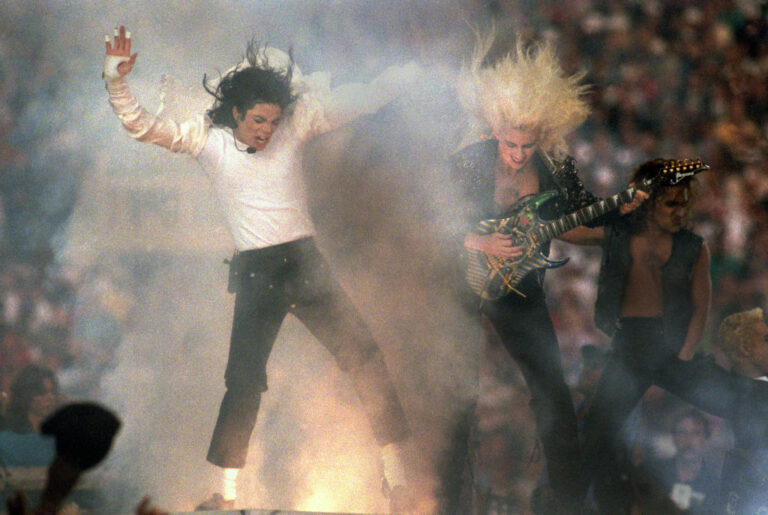
On 27 January 1984, Michael Jackson was arguably the biggest star on the planet. Thriller had spent the best part of a year at the top of the charts, and Jackson had recently signed a $5 million endorsement deal with PepsiCo alongside his brothers in The Jacksons. That evening, at the Shrine Auditorium in Los Angeles, a routine commercial shoot turned into one of the most infamous accidents in entertainment history.
The advert called for Jackson to descend a staircase to ‘Billie Jean’, performing in front of thousands of fans assembled to recreate the atmosphere of a live concert, all set against a backdrop of pyrotechnics. On the sixth take, the fireworks went off early. A spark landed on Jackson’s heavily pomaded hair, and it caught fire.
For a few seconds, Jackson kept dancing, unaware anything was wrong. His brother Jermaine, playing guitar just feet away, didn’t notice either, until crew members rushed in and tackled Jackson to the ground to smother the flames.
Doctor Steven Hoefflin later confirmed Jackson had suffered second-degree burns, and a small third-degree burn, to the back of his scalp. Jackson was hospitalised, and later described the pain in his 1988 autobiography, Moonwalk: “Bombs went off on either side of my head, and the sparks set my hair on fire.” He wrote that he’d been “dancing down this ramp and turning around, spinning, not knowing I was on fire,” and called the accident “stupidity, pure and simple.”
Remarkably, Jackson was discharged the following day, and doctors confirmed he’d be well enough to attend the Grammy Awards a month later. He was. On 28 February 1984, back at the very same Shrine Auditorium, Jackson won a record eight Grammys, still recovering from the burns beneath a specially arranged hairstyle.
Pepsi settled with Jackson out of court, reportedly for $1.5 million. He donated the money to fund a burns unit that would carry his name. Biographers have since pointed to the accident, and the prolonged pain treatment that followed, as an early chapter in Jackson’s later reliance on prescription painkillers, though he rarely discussed the long-term effects himself.
Pepsi pulled the footage from rotation immediately, but the moment endured regardless. Rediscovered footage of the accident resurfaced publicly in the years following Jackson’s death in 2009, and it remains one of the most watched, and most unsettling, pieces of unaired advertising in history.



