
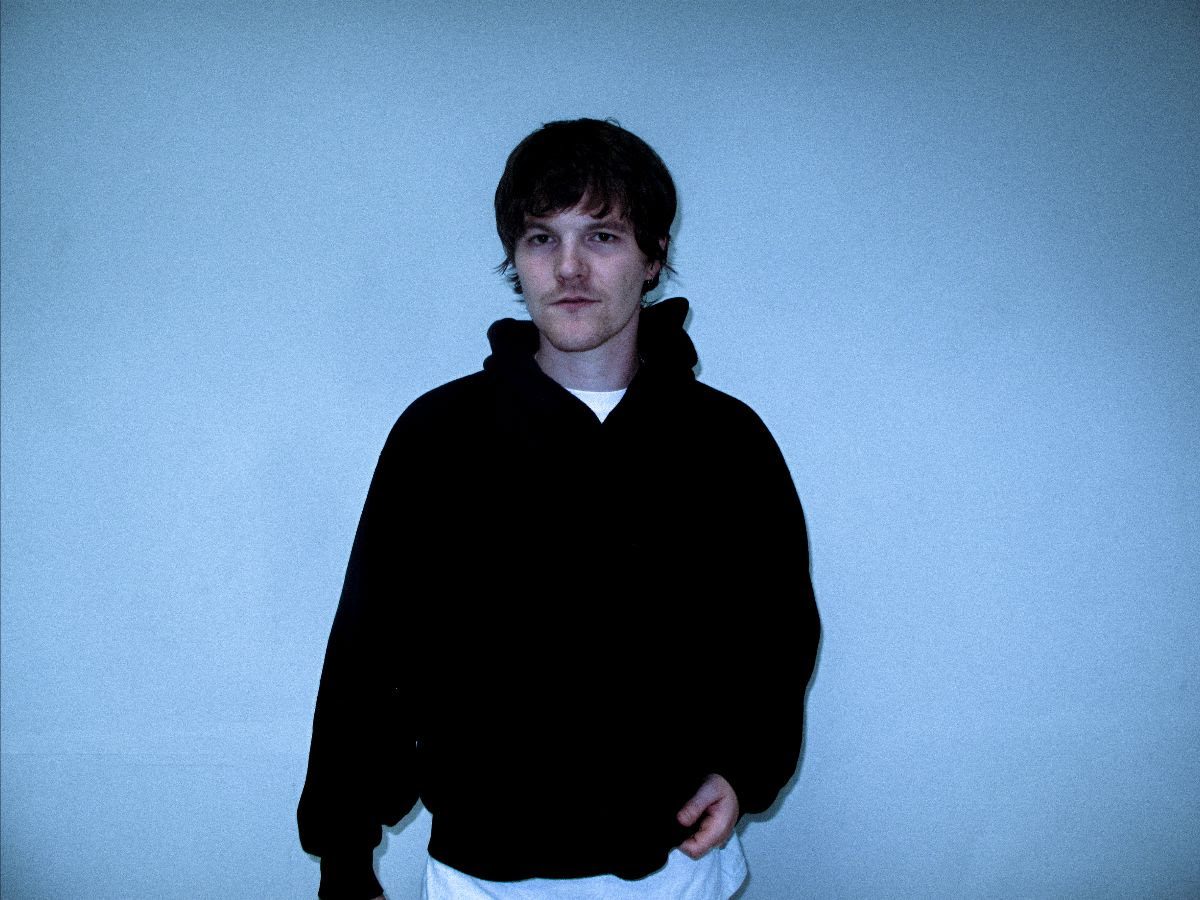
Before Chanel Beads, Shane Lavers spent his days in a library for the blind in Seattle, cataloguing titles in braille across eight-hour shifts with only the music in his ears for company. He has said he felt asleep his whole life until he started making music.
Your Day Will Come (2026) is his second album with that exact title, and the question he kept asking himself while writing it was this: “Are we living in hell, or is love enough?” The music does not answer it, which turns out to be the right decision.
The album is more disciplined than the 2024 debut, made again in his small Brooklyn studio with Maya McGrory and violinist Zachary Paul. The hooks stay longer before dissolving back into the surrounding atmosphere, the songs resolve rather than fade, and the arrangements feel built rather than discovered.
‘Song For The Messenger’ is the clearest entry point: a slacker vocal over a gilt-edged refrain that sounds like a pop song heard through a wall, familiar enough to catch and strange enough not to hold. Lavers has described walking for hours at night in Brooklyn listening to each idea on loop until it clicked into place, and the album has that quality.
‘Opening In The Gate’ is the most fully realised track. It opens on a scream that disappears before you have processed it, gives way to Zachary Paul’s plucked violin and choral synth pads, and builds under Mari Rubio’s pedal steel drone to a lyric about cockroaches in concrete and warmth underneath the feet. The guitars here have a physical specificity the more diffuse elements lack: a semi-metallic clang that anchors the track before it opens out again.
‘Drunk Stupid In The Structure’ arrives late in the album with McGrory’s voice and Lavers’ swooning synths losing themselves in each other over a slightly out-of-tune guitar. “Feels like a ghost is near / nothing real is true.” These are the moments when the album earns the density it has been building toward.
After a show for the 2024 album, someone messaged Lavers to say it was the worst gig they had ever seen, that he had ruined his own record, and that Chanel Beads was emphatically not a punk band. Lavers described this as a fun experience: there was an entirely different band living in this person’s head, and some of that energy made its way into the 2026 record. I think you can hear it in the mid-album tracks that resist resolution, particularly ‘Tyler Richard’ and ‘JBL In The Fireplace’, which thicken the production without adding new melodic information until the tracks start to blur. The album asks 14 tracks’ worth of sustained attention, and the mid-section is where that ask is most tested.
Lavers has said that once an album becomes a product it almost feels stolen from you, that the songs he writes for himself might be different to the ones the listener receives. Calling the second album the same thing as the first is a way of insisting the work belongs to him and to everyone else at the same time. Whether or not you find that interesting, the music is strong enough that it barely matters.



