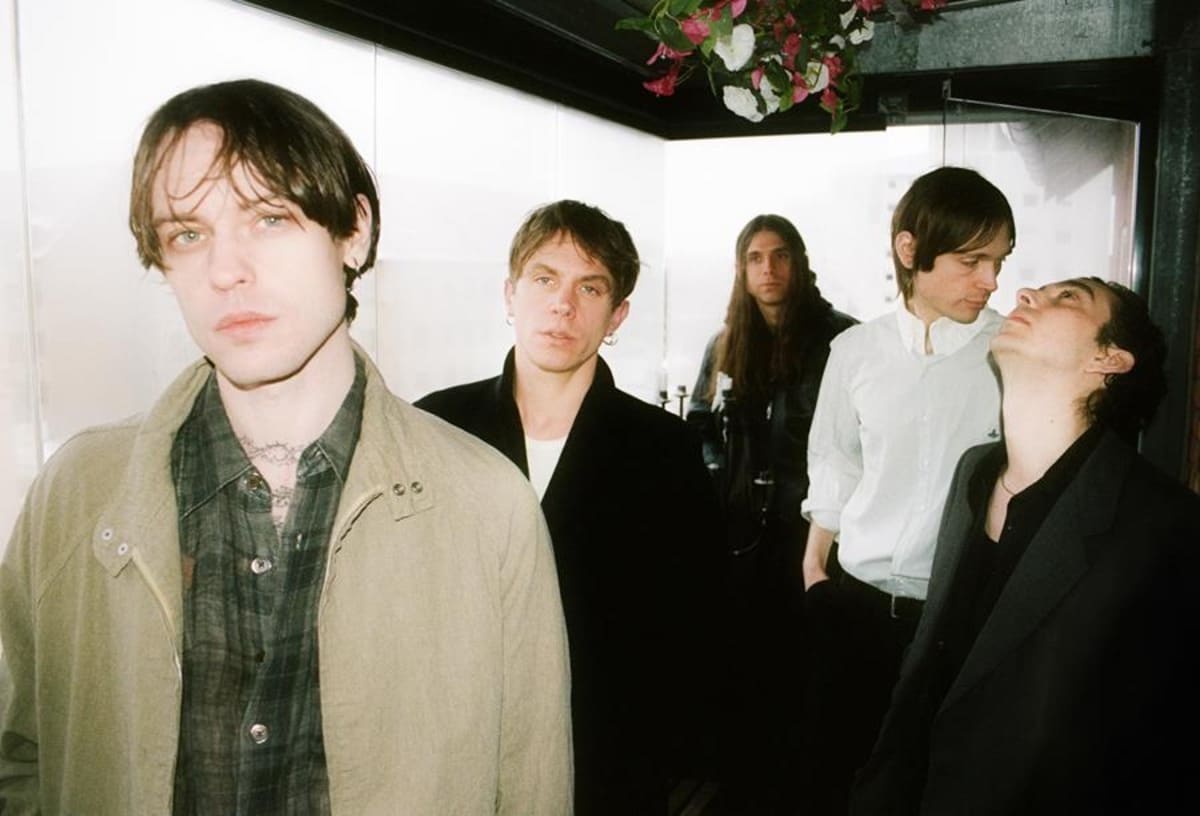
Iceage went back to Silence Studio in rural Sweden to make this record, the same location where they recorded Plowing Into the Field of Love twelve years ago. It’s the first time in their 18-year history they’ve returned to a previous recording location, and the decision says something about where they think they are.
Plowing was the album that broke them open; For Love of Grace & the Hereafter feels like a band who know what they’re good at and have stopped saying sorry for it. The approach was stripped back to the essentials: decisions made live, minimal overdubs, lyrics written only weeks before recording. Rønnenfelt: “The songs needed to be immediate, urgent, raw, and fast. We wanted to shed any unnecessary weight.”
It’s audible immediately on ‘Ember’, which opens on a driving rockabilly-adjacent rhythm before Rønnenfelt delivers the line that defines the album: “I love you in an ominous way.” That tension – tenderness and threat in the same breath – is what Iceage have always done, and here they do it with more confidence and less noise than before. The hooks are front and centre and they’re earned.
‘Star’ is the album’s most fully realised track, scrappy garage punk dissolving into something close to shoegaze, and it’s easy to hear why BBC 6 Music A-listed it. ‘The Weak’ moves faster, built around jittery jangles and a chaotic breakdown involving handclaps and pennywhistles that shouldn’t work and absolutely does. ‘No Fear’ carries the album’s emotional argument in its title – the most direct statement of defiance in their catalogue, and the track that makes it clear this is an Iceage record about finding something to hold onto rather than watching everything collapse.
The album also suggests that Rønnenfelt’s prolific solo work – Heavy Glory, the Dean Blunt collaboration lucre, Speak Daggers, all released in the past two years – has fed back into the band. His voice is more varied and assured in its quieter registers, and the literary sensibility has sharpened.
The mid-album loses a little momentum around ‘Lifetime’ and ‘Holy Water’, two tracks that pass without leaving a distinct mark. But closer ‘True Blue’ lands the album’s most vulnerable moment, and you leave feeling like something has been resolved that earlier Iceage would have left pointedly unresolved.
Treble’s observation – that this is the first Iceage record that feels like easing into a groove rather than a significant shift – is fair. It doesn’t shake you the way Plowing or Beyondless did. But eighteen years in, choosing hope over collapse is a harder move than it looks.