
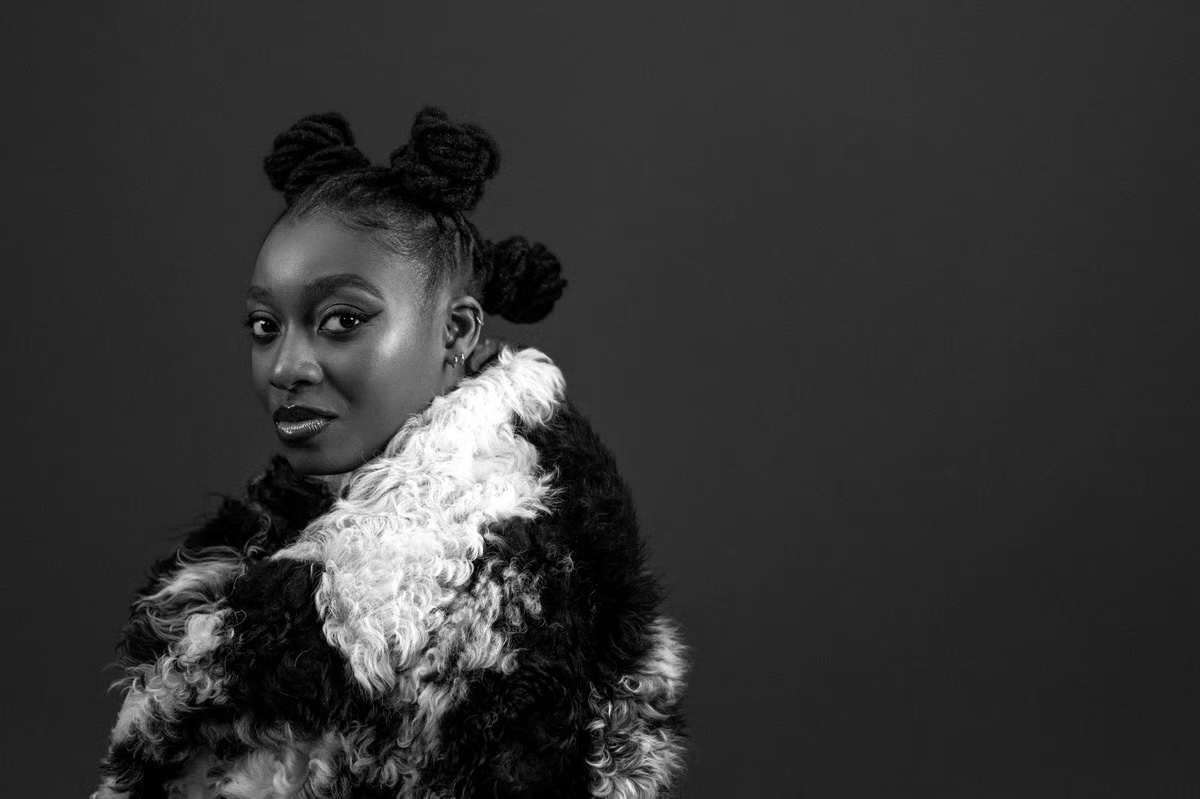
Sugar Girl is thirteen minutes long and Little Simz spends most of them in disguise. The pitch-shifted, autotuned register she adopts across the first three tracks sounds closer to Doja Cat or Playboi Carti than the artist who made Sometimes I Might Be Introvert, and the disorientation is real.
Then, mid-way through ‘That’s a No No’, the beat drops and she snaps into the fast, aggressive verse that reminds you what she actually sounds like: sharp, precise, completely herself. The shift lasts about a minute and it’s the best thing on the EP, which is a reasonable indicator of where the rest of it sits.
Producer Jakwob keeps the production spacey and atmospheric throughout. ‘Game On’, debuted at Coachella with a surprise JT appearance, is the EP’s most committed moment – ominous and hectic, with JT arriving in full flow in a way Simz herself often isn’t here. The rock section mid-track is the boldest production call across the four songs.
‘Telephone’, with 070 Shake, has the best beat by some distance, ghostly synths and stadium-ready guitar that would suit a bigger song. Both vocalists are buried in reverb to the point of losing presence, which is an odd choice for a four-track project with limited real estate.


‘Open Arms’ features Simz on the pre-chorus only, with Nigerian rapper Deela handling the rest. It is fine. Deela is fine. It is not a Little Simz song in any sense that matters.
I understand the logic of the between-album palate cleanser, and Simz has established this tradition across the Drop series. The question with Sugar Girl is not whether she should experiment – she absolutely should – but whether this particular experiment is interesting enough to justify the trade.
The rage-trap and Afro-tech territory she enters is not new, and the EP doesn’t bring anything distinctive to either. When she surfaces on ‘That’s a No No’ in her own voice, the contrast with everything around it makes the rest sound more deliberate than it probably is. I’ll be back for the full album.