
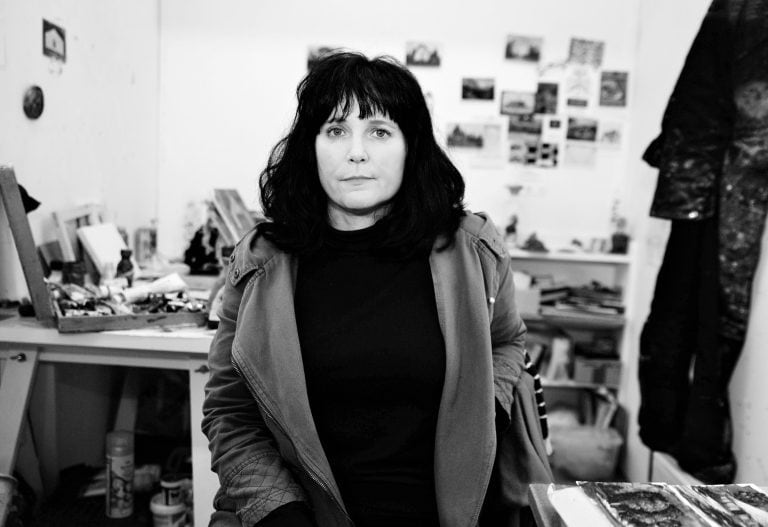
At first glance, Joanna Whittle brings landscapes to life, but a second reveals something deeper. Her miniatures, painted on copper plates and postcards, lure you in until you realise you aren’t merely looking at a thickly forested scene, but something alive.
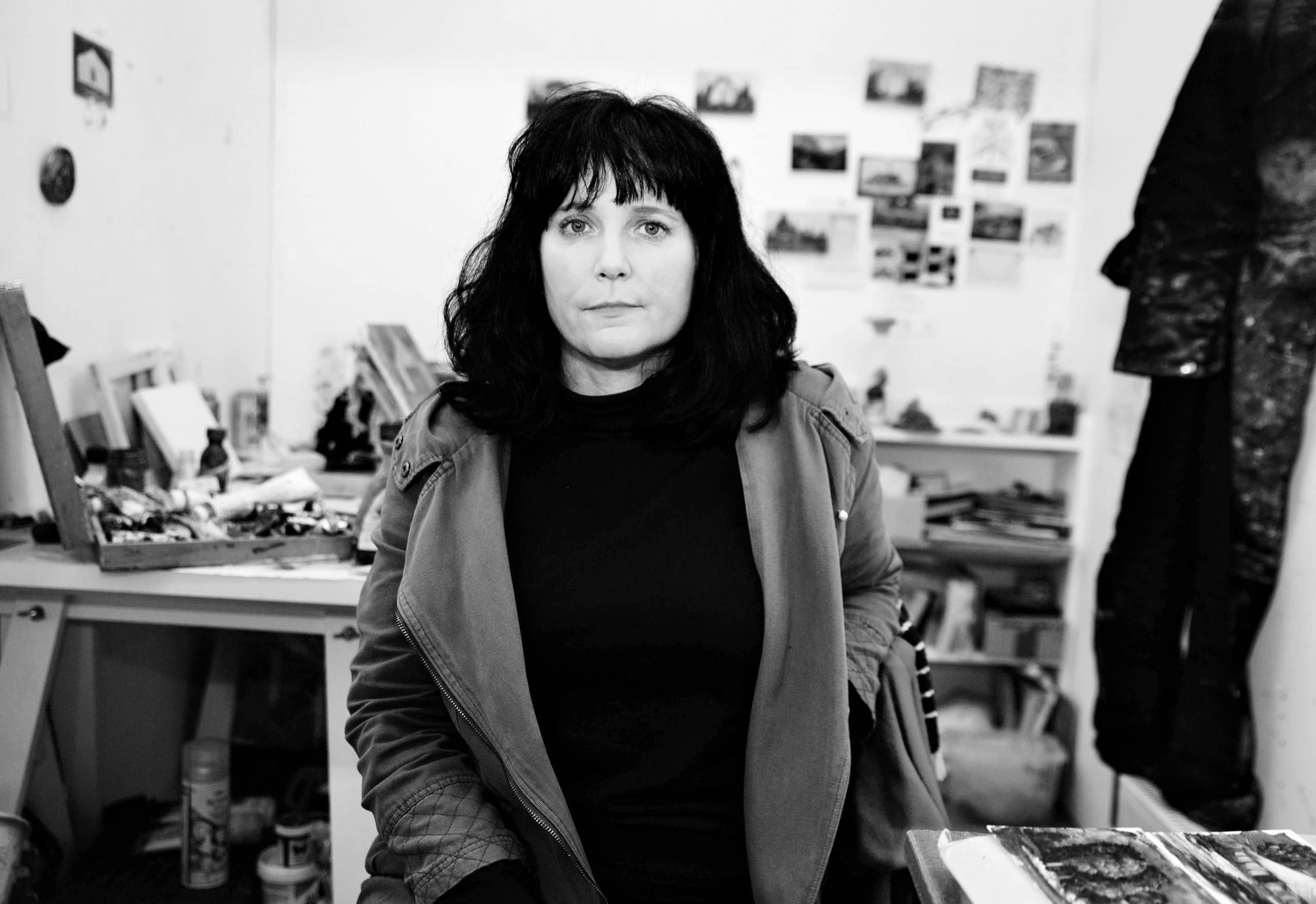
Born in Zambia to an Irish mother and English father before half-settling in Saudi Arabia then Dubai, Joanna Whittle didn’t find anchorage in England until she was 16 years old. It’s because of this fact that her art is so perplexing. One instantly sees, knows, there’s a deeply embedded sense of place in Joanna’s work, that she’s capturing a part of a terrain in her mind that’s been shaped by a real landscape somewhere in Europe. There’s a Teutonic energy to Joanna’s paintings of forested gateways and mausoleum-like tents.
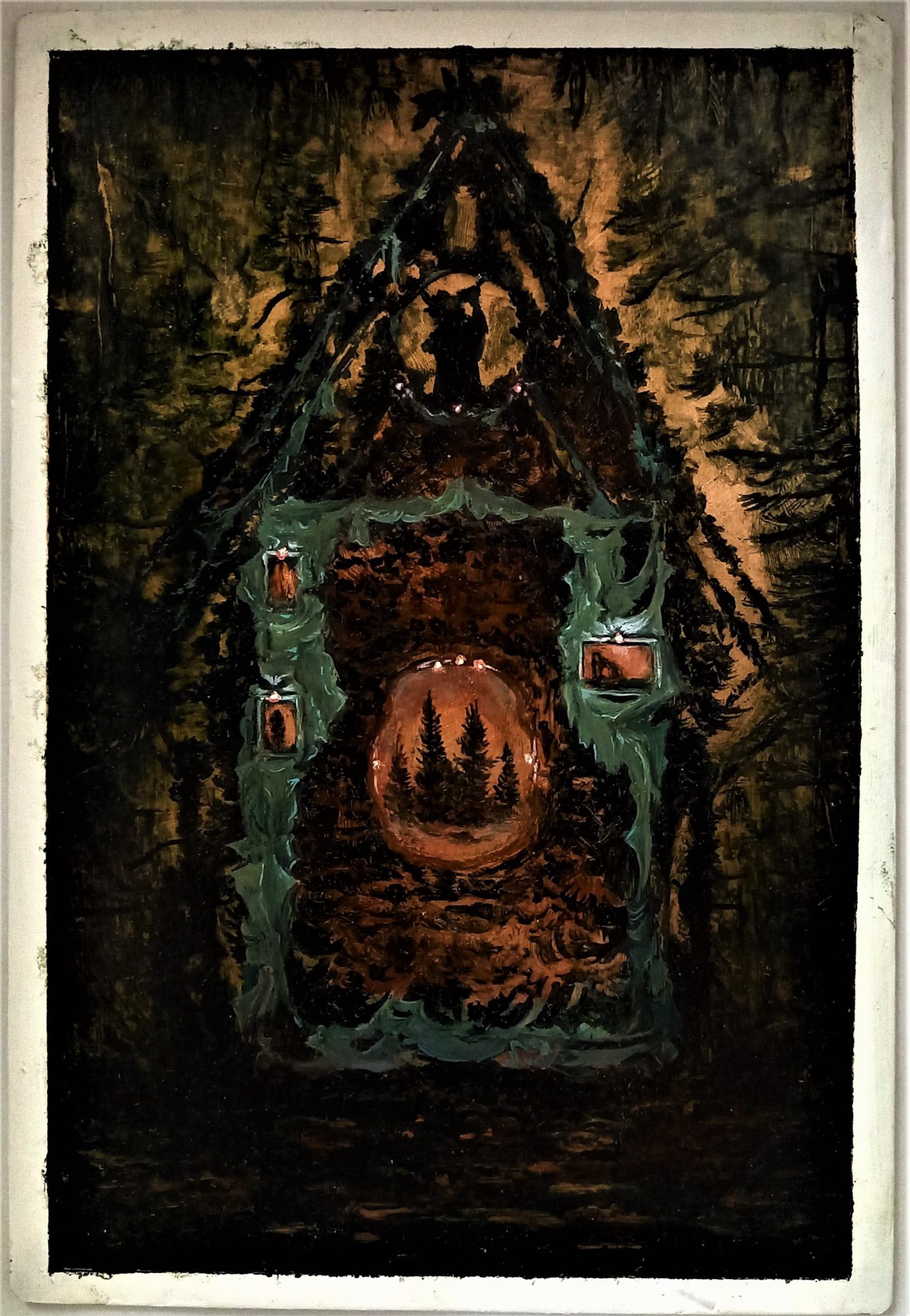
Forest Shrine (Forest)
Oil on copper
15 x 10 cm
2021
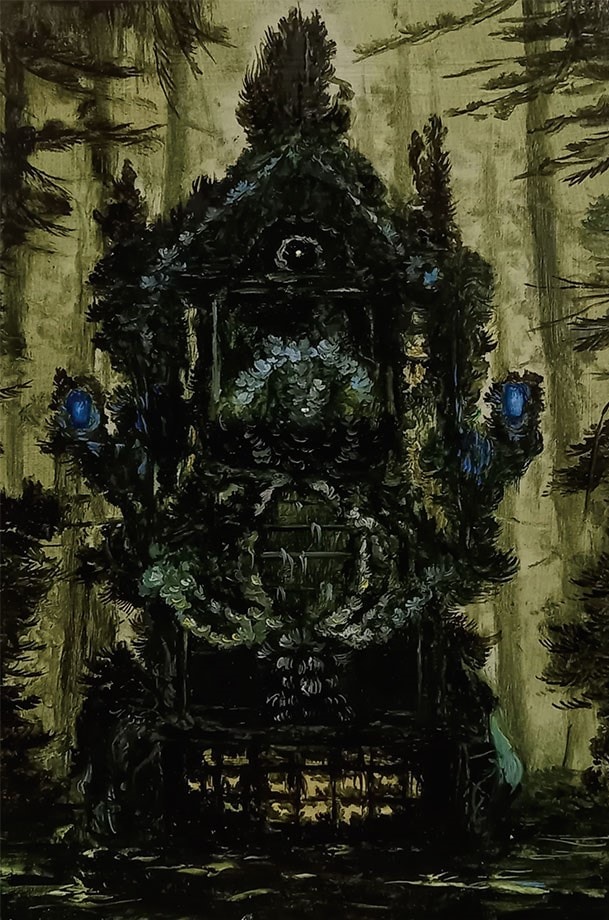
Forest Shrine (Blue Lights)
2020
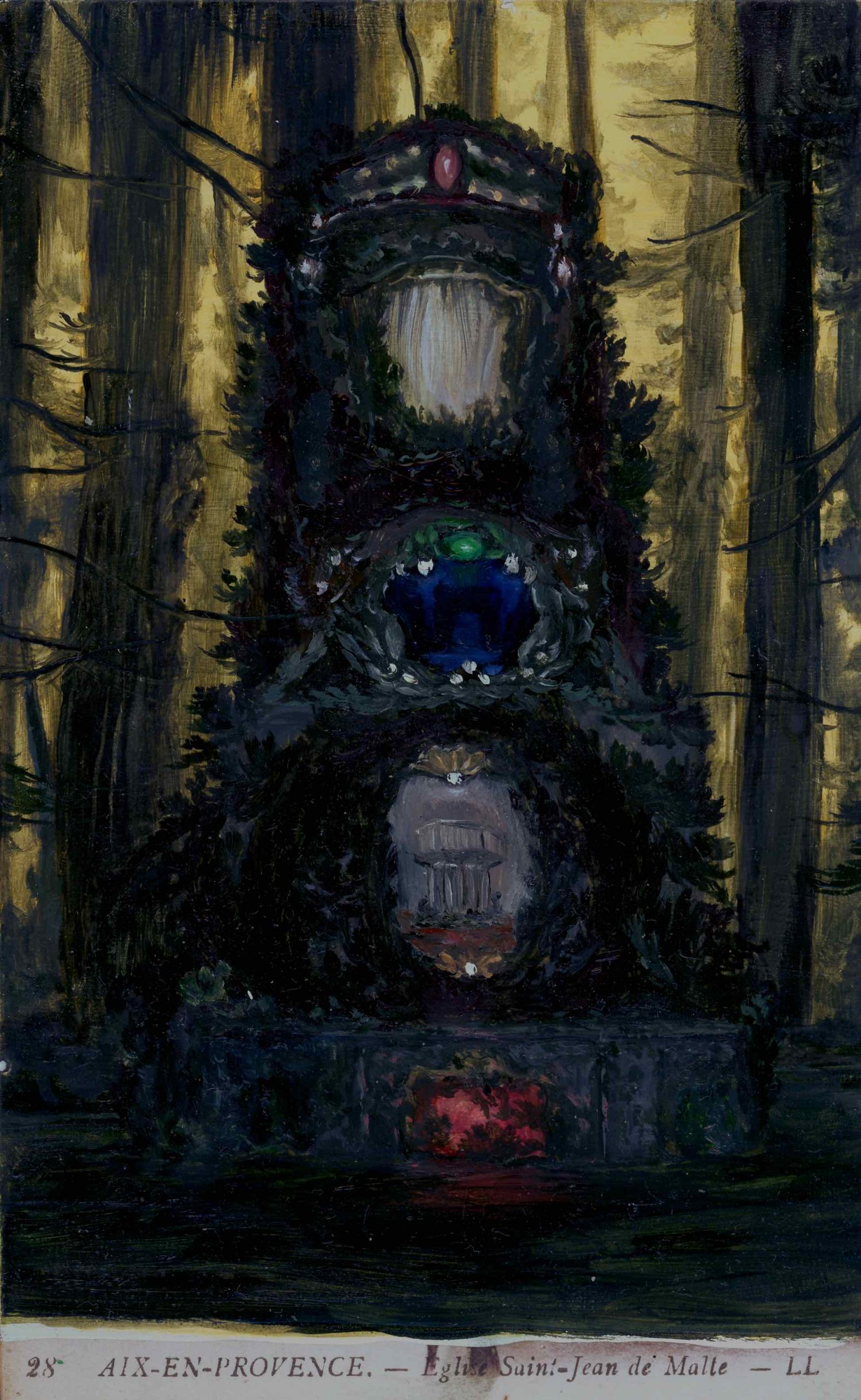
Forest (Emergence) Oil on postcard 13.5 x 8.5cm 2022
You studied at Central Saint Martins towards the end of the 90s, what was formal art education like then?
If you were making art as a woman it had to be this kind of neurotic stuff about identity or it had to be through digital media, it was actually quite hard to be a painter. There was also this fetishisation of the artist themselves which ebbed slightly afterwards but is coming back again, you can see it with everyone having studio shots and Instagram. We’d paint at Saint Martins but it was always these big abstract works like, ‘yeah! I’m painting!’. I used to sneak off at lunchtime to the National Gallery to go and look at Friedrichs, which at that time was really quite derided. It wasn’t until artists like Peter Doig and Michael Raedecker emerged that this school started to come back.
The fact you had to covertly seek out the traditionalist, pioneering landscape painters of the 19th and 20th centuries, in this ‘edgy’ way, is staggering. Was there much more of a postmodernist emphasis at CSM?
They’d just started the CFAP (Critical Fine Art Practice) curriculum. People would ask, ‘oh my god, why are you still painting?’ and there was a general feeling of, ‘painting’s dead again!’ in the air. So painting was quite a silly thing to do and if you did it, you’d better have your theory ready. It wasn’t good enough on it’s own, there had to be this entire rationale around it too. But, in a sense it was a great grounding too, there are writers and philosophies I discovered at this time which still really underpin my work today… so it was definitely worth hauling all those books around.
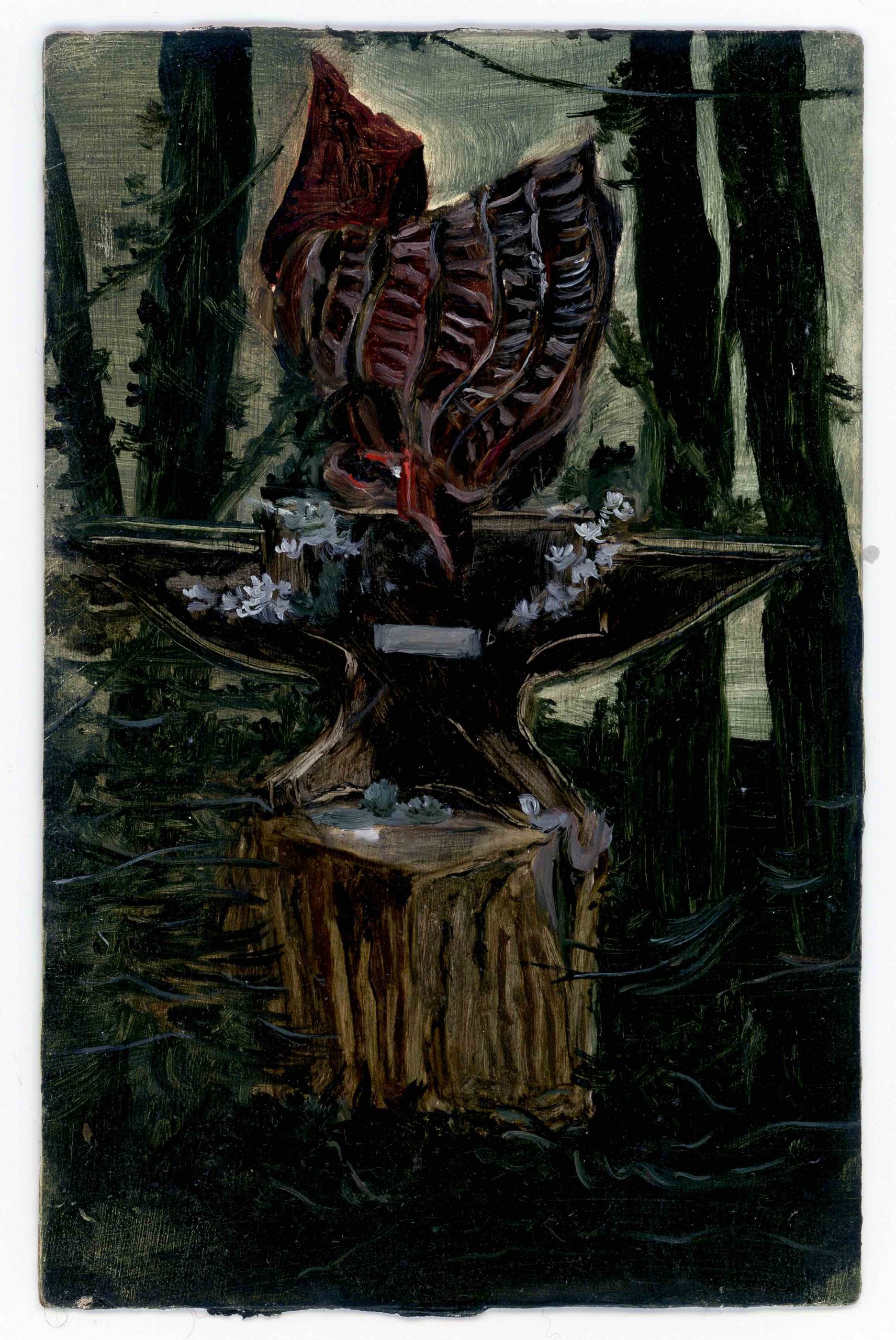
Landshut
Oil on postcard
14 x 9cm
2021
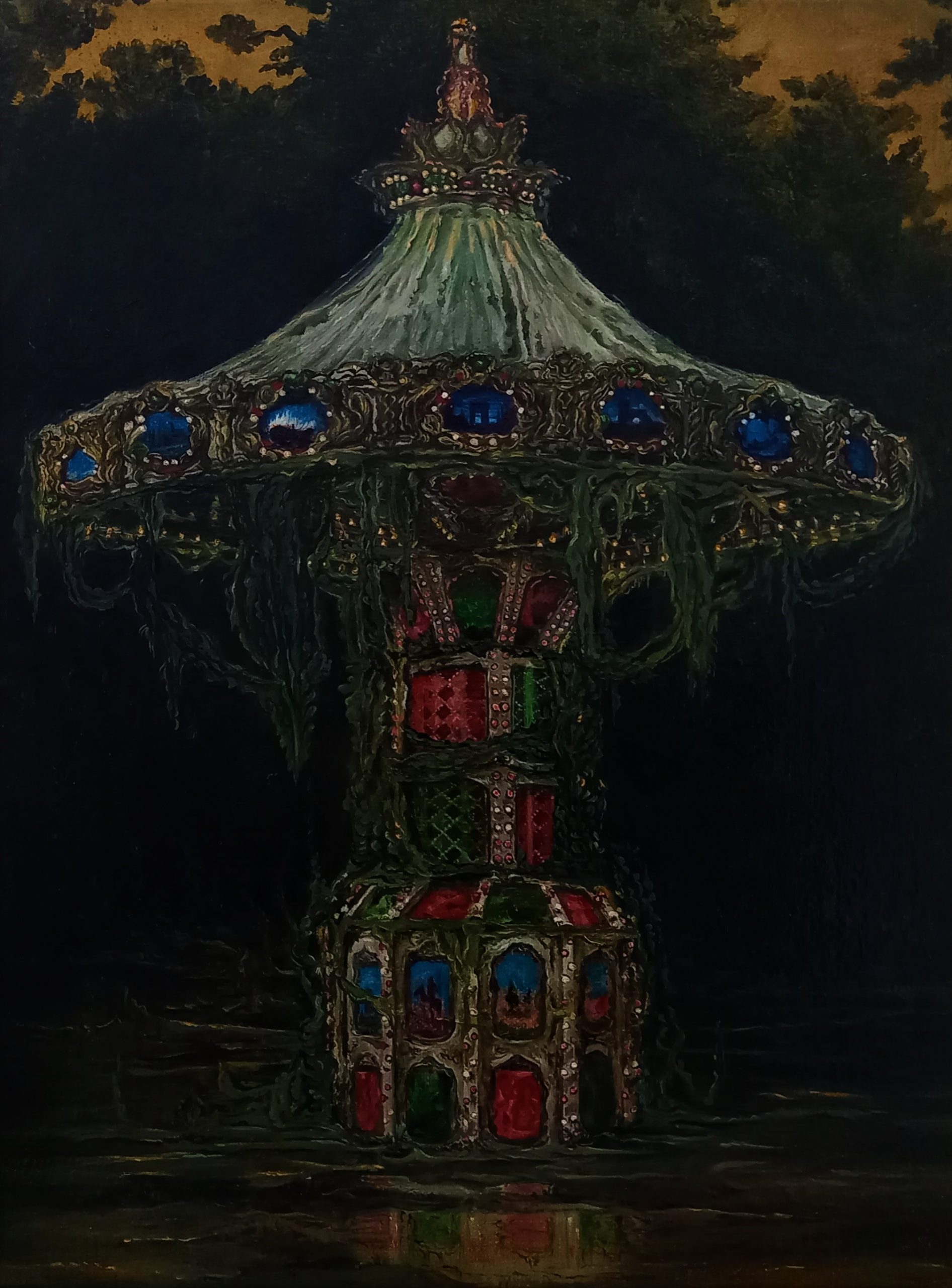
The Machine
Oil on canvas
24 x 18cm
2020
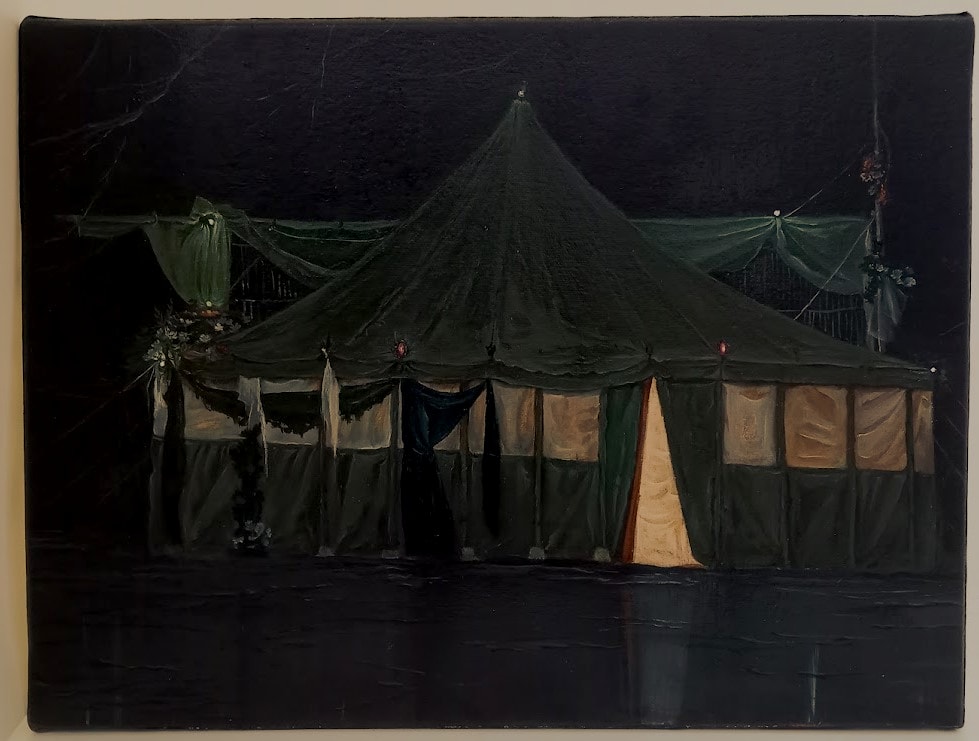
Black Water Tent
Oil on canvas
18 x 24cm
2022
Saint Martins was very much about the rules, but the Royal College I enrolled in after wasn’t like that at all. As long as you were being authentic in what you were doing, you were encouraged, there weren’t any barriers. I thrived there but after graduating and practicing for a few years I took a break form painting. I was scared of making the same painting in different formats for the rest of my life. I needed more to feed my practice. I only picked it up several years later when I found myself in Suffolk, helping manage Landguard Fort in Felixstowe – an ancient heritage site dating back to the 16th Century with First and Second World War outposts – sat in the middle of a SSSI (Site of Special Scientific Interest) nature reserve.
I’m trying to link your very idiosyncratic imagery to your lived experience over this period. When did all this come to a head and you start sublimating this intentionally through your art?
After Landguard Fort I started volunteering at music festivals. You’d be working at nighttime, with the whole area completely empty. All of the structures seem like they’re floating, because it’s only the tents and the stages that are lit. It’s beautiful.
And this was all fully realised in lockdown?
In January 2021. I was in this freezing, dark studio in Sheffield, and they just started to emerge. It just felt like the right thing to do. To build them and be completely alone in the studio. Just like with the surrealists and the Exquisite Corpse – in which one artists does one part of the body before passing it on, making the figure lose its essence of humanity like Frankenstein – I have that in my landscapes. They’re not like landscapes by Gainsborough or Constable, they’re much more fractured.
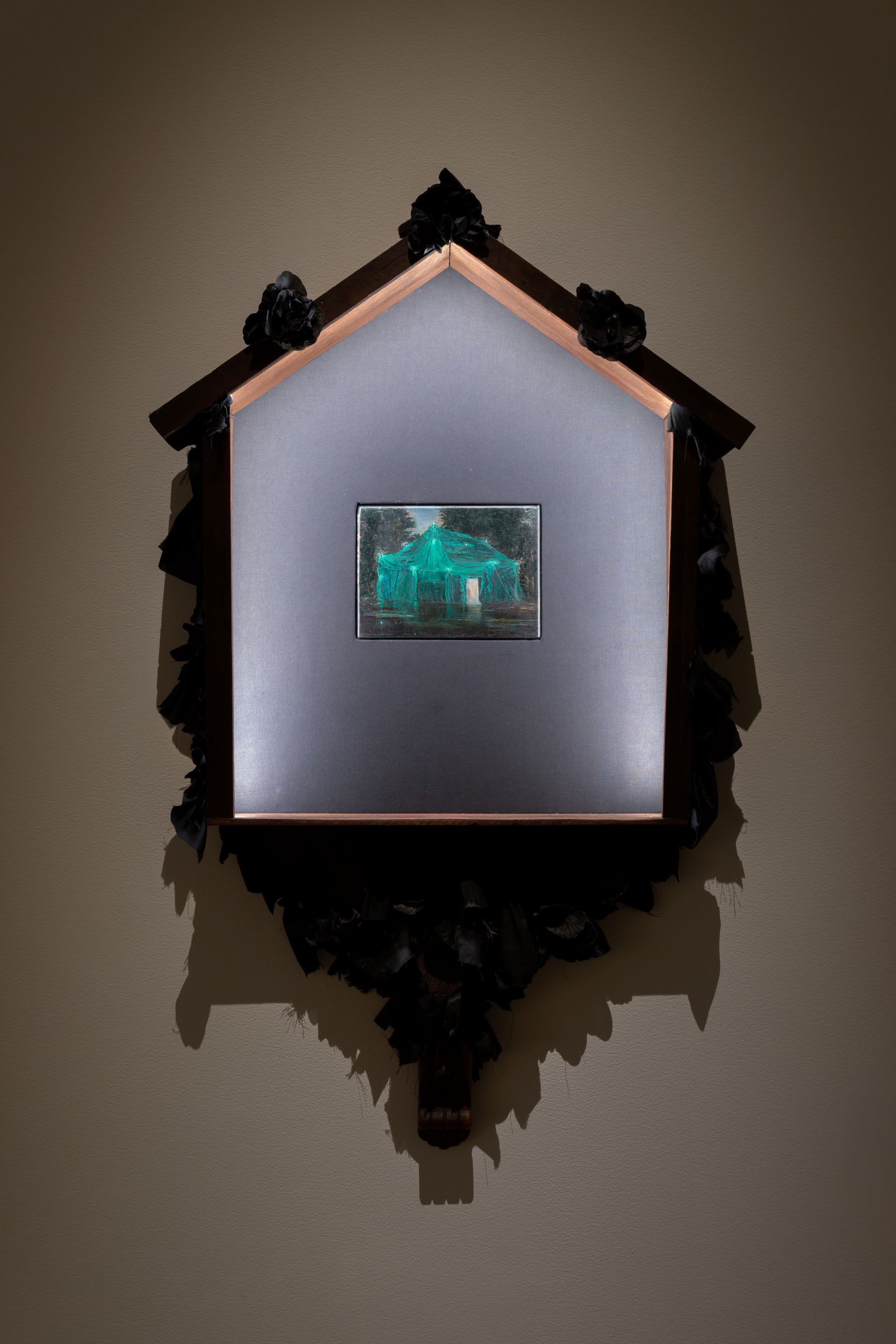
Green (Dark Water)
In shrine
2021
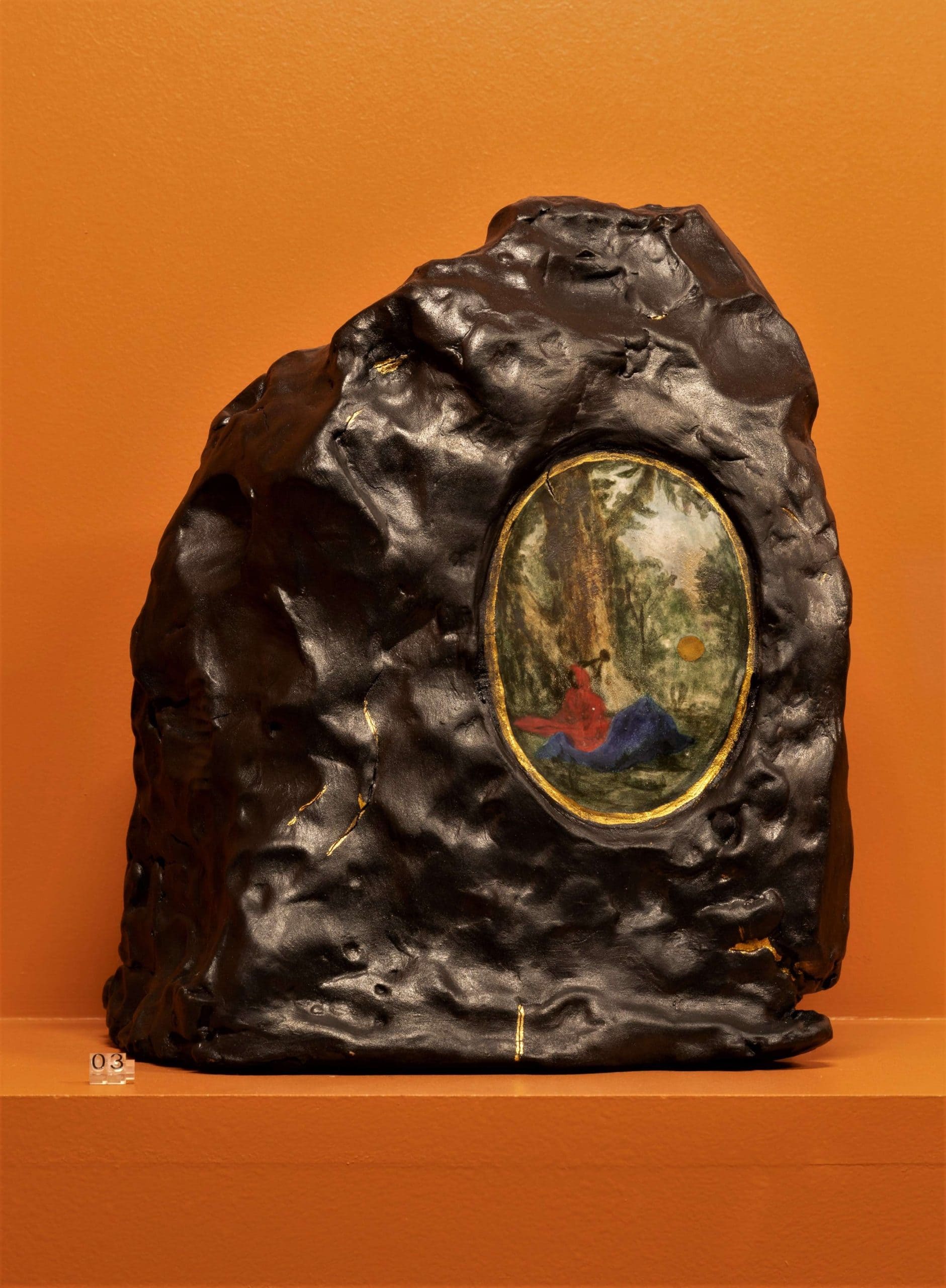
Solemn rock
Cermaic, wax, gold
2020
It’s almost like constructing a theatrical space. If you think of Giorgio de Chirico (Italian pre-surrealist and writer), and you think of his long shadows and enormous, statues and facades, there’s this sort of stage-setting feel to the whole thing. There are shadows but you can’t see the person. With my work, you know that someone’s been there, but they’re not there now. Or maybe they are there? Or maybe they’re going to come back? Or maybe they’re watching me? There’s a presence that’s concealed.
The works themselves are incredibly small, so the detail in form is unmissable to the viewer. Are these created as more private artefacts for in the home, similar to Orthodox Christian or Buddhist icons?
The idea of the sacred and what that actually means is of great interest to me. What is the sacred and how do we mourn today? I’m not so sure. I was brought up as a lapsed Catholic, by a lapsed Catholic mother, so I got all of the guilt when I was sometimes lightly persuaded to go to church but not all of the good stuff! It was always so secretive for me, growing up in Saudi Arabia. Christianity was tolerated but you had to be quiet about it, hiding little religious medals in my bag so they wouldn’t get taken off you when you went through customs, so that romanticised it further.
But it’s easy in a religion, they instruct you how to mourn. But what about for secular lifestyles? There’s mourning in these photos, mourning for the landscape. My dad used to go to Japan a lot and tell me about the shrines he visited in the forests, and I thought about them a lot when I was painting these. But also about the dark woods of the Black Forest in Germany where my parents lived before I was born, I only glimpsed it through photographs and retold memories.
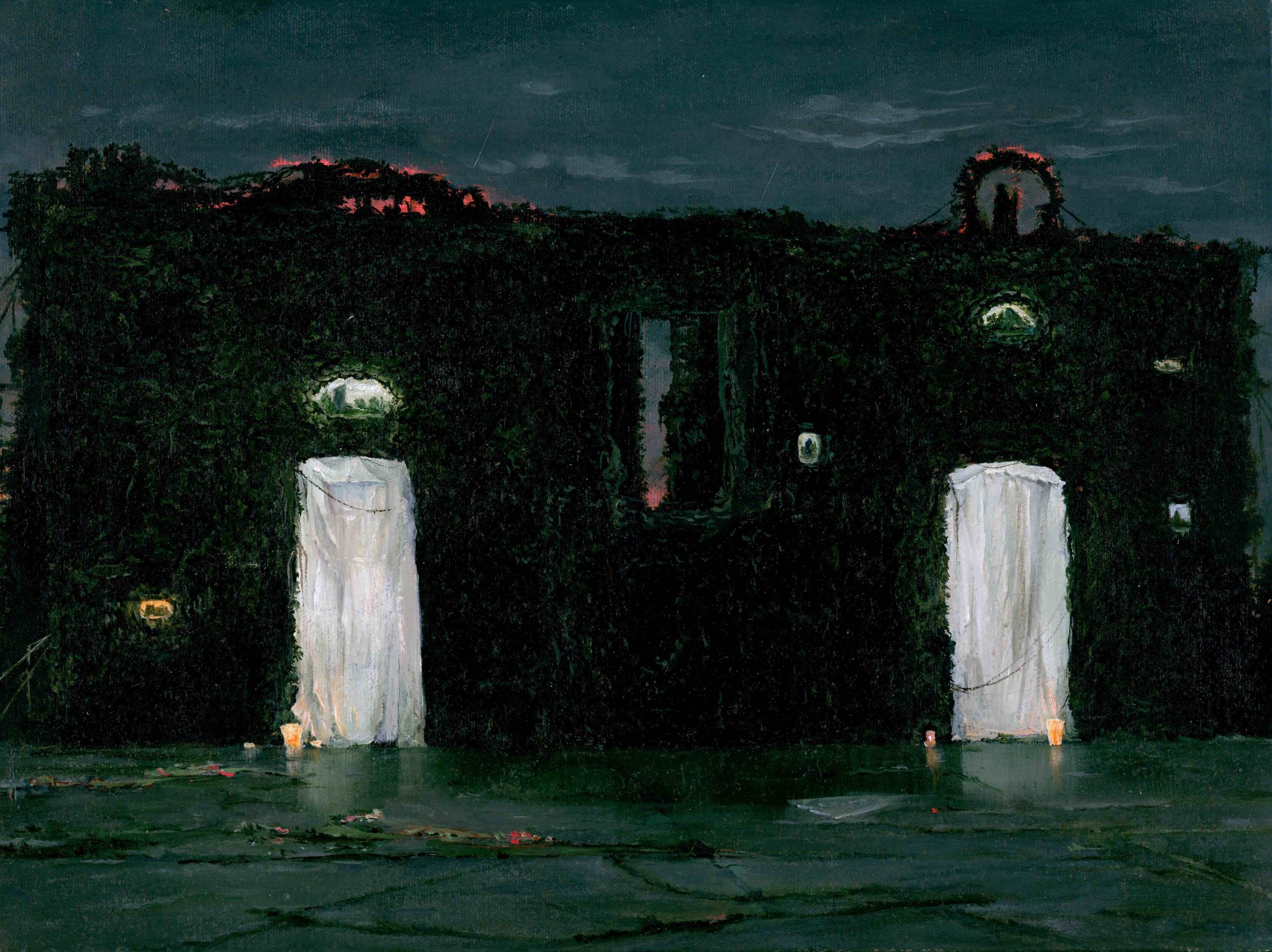
Leaf Wall (Dusk)
Oil on canvas
18 x 24cm
2021
In terms of artistic movements and vanguards, do you think vanguardism as a phenomenon is completely historical to us now? Can it be achieved in the present with the atomised culture we live in, mainly wrought by technology?
I don’t think you can tell at the time. When we look at the past we can take the highlights and define it as a movement. A recent example would be the 90s and rave culture. At the time we didn’t see it as being all so important, but 25, 30 years later, Jeremy Deller did this film called Everybody In The Place: An Incomplete History of Britain 1984 – 1992. You don’t know what you’re experiencing at the time and although I was too young to experience the good bit (I kind of caught the tail end when everybody was a bit confused and sad), when you watch it in film form you’re pleasantly surprised to see it formalised into a historical narrative and it changes your attitude to, ‘yeah, it was really good actually, we were great!’.
And so these works, having germinated during the pandemic, are defined by that moment, but moving forward, if you’re painting for years and years from now, what direction will your art take?
My painting will pull back now. It’s gone really far into the ‘forest’ [laughs], and so they may be intermittently brought back into the real, but in a way that reality falters, where there’s always that darkness flickering behind it. The forest is always there.

